ThermoWorks Thermapen ONE Instant-Read Thermometer
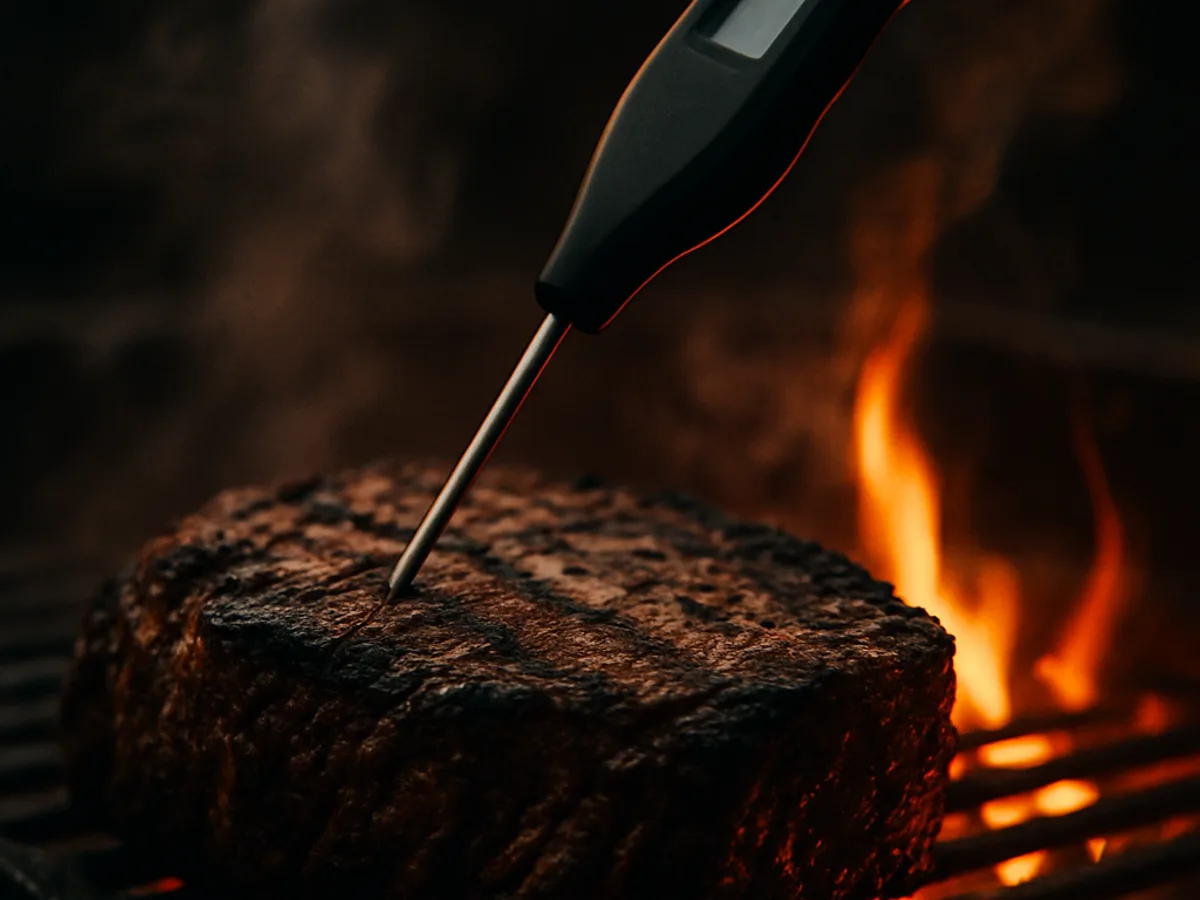
The ThermoWorks Thermapen ONE is the best instant-read meat thermometer for a backyard pitmaster. It reads in about one second with ±0.5°F accuracy across the whole cooking range, is IP67 waterproof, and carries a 5-year warranty. Federal food-safety agencies are blunt that a food thermometer is the only reliable way to know meat is safely cooked, so accuracy and speed are the whole point of the tool. Cheaper picks get you to the same safe numbers for far less; the Thermapen buys speed, durability, and traceable calibration.
Rate this pick
Our own community ratings — from confirmed Amazonia readers, never Amazon. Yours helps the next person decide, and steers what we feature next.
What does the research say about the ThermoWorks Thermapen ONE Instant-Read Thermometer?
Every claim below is tied to a source you can open, quoted verbatim — how we research picks.
-
“The only way to tell if food is safely cooked is to use a food thermometer. You can't tell if food is safely cooked by checking its color and texture (except for seafood).”
A food thermometer is the only reliable way to know food is safely cooked; you cannot judge by color.
CDC, Four Steps to Food Safety (Keep Food Safe) · 2024 ↗ -
“Beef, Pork, Veal, and Lamb (chops, roasts, steaks) 145ºF with a 3-minute rest time”
Official safe minimum internal temperatures, as measured with a food thermometer.
U.S. FDA, Safe Minimum Internal Temperatures chart · 2017 ↗ -
“Cook ground beef, veal, lamb, and pork to at least 160° F (71° C). Cook all poultry to a minimum of 165° F (74° C). Cook beef, pork, veal, and lamb roasts and chops to at least 145° F (63° C), with a 3 minute rest time.”
FDA cook-temperature guidance restates the same safe minimums.
U.S. FDA, Cooking (Food Safety for Moms-to-Be) · 2024 ↗
Educational summary of the research — not medical or veterinary advice. Evidence strength varies and individual results differ; talk to a qualified professional before changing your (or your pet's) health routine.
How does the ThermoWorks Thermapen ONE Instant-Read Thermometer compare?
| Thermapen ONE (instant-read) | Leave-in probe thermometer | Dial/analog thermometer | |
|---|---|---|---|
| Speed to reading | ~1 second | Continuous (monitors over hours) | 15-30+ seconds |
| Accuracy | ±0.5°F | Typically ±1.8°F to ±2.7°F | Often ±2°F to ±5°F, drifts |
| Best use | Spot-checking doneness at the grill | Long smokes/roasts, hands-off alarms | Rough oven/roast checks |
| Spot-check many pieces fast | Yes, ideal | No, one fixed spot | Slow, awkward |
| Leave in during cook | No | Yes | Some oven-safe models |
Buy it if
- Grillers and smokers who want the fastest, most accurate spot-check of doneness on the market
- Anyone cooking for family or guests who takes food safety seriously and won't guess by color
- High-volume cooks flipping many burgers, chops, or chicken pieces who need a 1-second read
- Buyers who value NIST-traceable calibration, IP67 durability, and a 5-year warranty
Skip it if
- Budget buyers who just need to hit safe temps: a value probe reaches the same numbers for a fraction of the price
- Pitmasters who mainly do long, hands-off smokes and want a leave-in probe with alarms instead
- Occasional cooks who grill a few times a year and won't use the extra speed or accuracy
Is the ThermoWorks Thermapen ONE Instant-Read Thermometer worth it?
The Thermapen ONE is the reference-standard instant-read and the single most important food-safety tool a backyard pitmaster can own. Its 1-second, ±0.5°F reads make hitting the FDA/CDC safe minimum temperatures effortless, and color simply is not a safe substitute for a thermometer. If price is the constraint, a value probe gets you to the same safe numbers for much less — but if you cook often, the Thermapen's speed, durability, and calibration are worth it.
Check price on Amazon Live price & reviews on AmazonQuestions, answered
- What are the safe minimum internal temperatures I should cook to?
- Per the FDA chart, measured with a food thermometer: whole cuts of beef, pork, veal, and lamb (steaks, chops, roasts) to 145°F with a 3-minute rest; all ground meats to 160°F; and all poultry (ground, parts, whole) to 165°F. Fish is 145°F or until opaque and flaking. Source FDA Safe Minimum Internal Temperatures chart ↗FoodSafety.gov cook chart ↗
- Can't I just tell doneness by color, juices, or feel?
- No. Federal food-safety agencies are explicit that color and texture are not reliable indicators. Ground beef in particular can turn brown before it reaches 160°F, so a piece that looks 'done' may still harbor bacteria. The CDC states the only way to tell food is safely cooked is with a food thermometer. Source CDC, Keep Food Safe ↗USDA FSIS, Color of Cooked Ground Beef ↗
- Instant-read like the Thermapen ONE, or a leave-in probe thermometer?
- They do different jobs. An instant-read (Thermapen ONE, ~1 second) is for spot-checking doneness fast across many pieces of meat right at the grill. A leave-in probe stays in the meat during a long smoke or roast and alarms when the target temp is hit, so you don't open the lid. Serious pitmasters use both; if you buy one first, buy the instant-read, because it verifies the final safe temperature of everything you serve. Source ThermoWorks Thermapen ONE ↗
- Where do I place the thermometer for an accurate reading?
- Insert the probe into the thickest part of the meat, away from bone, fat, and gristle, since those read differently than muscle. For thin cuts, insert from the side. Check the temperature near the end of cooking and in more than one spot on large or irregular pieces. Source USDA FSIS, Food Thermometers ↗CDC, Keep Food Safe ↗