Weber Smokey Mountain Cooker 18-Inch Charcoal Smoker
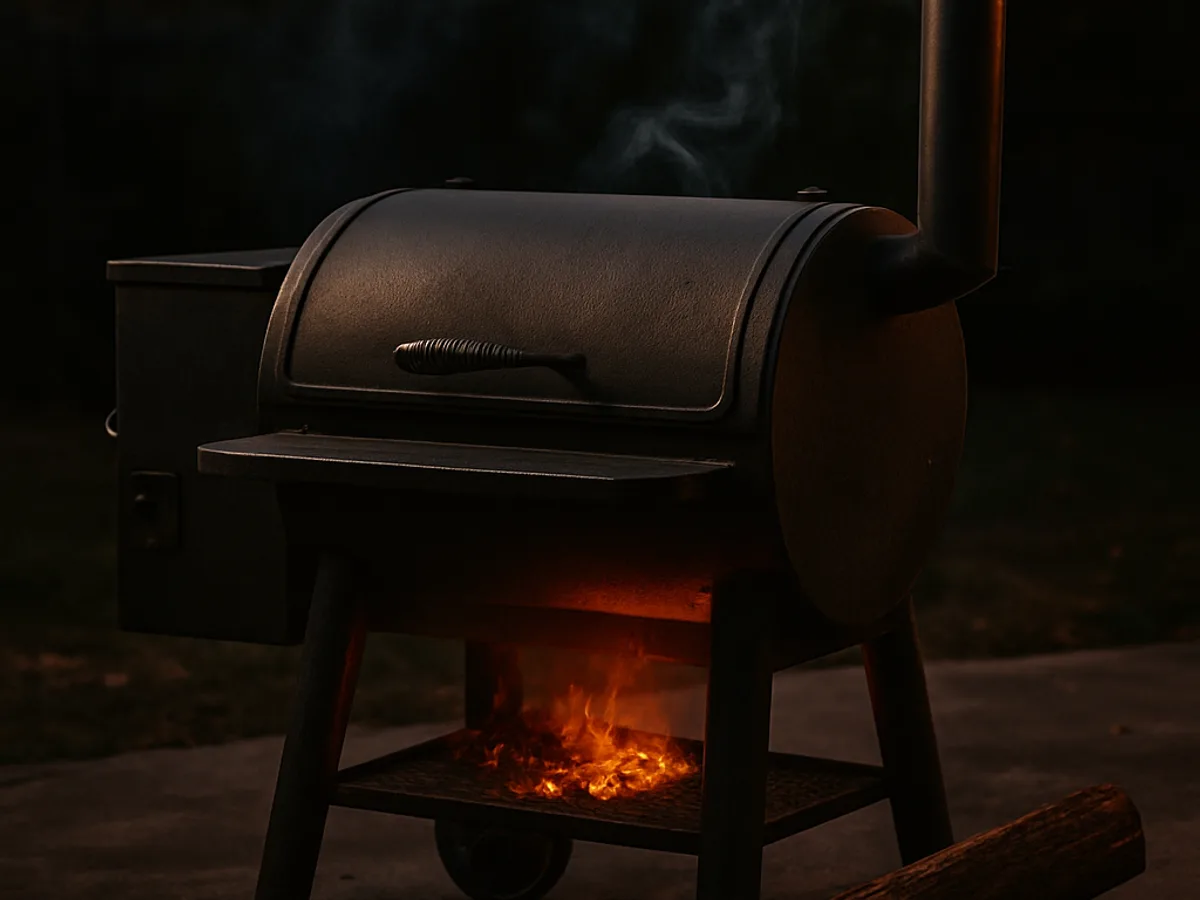
The Weber Smokey Mountain 18-inch (WSM, model 721001) is a charcoal vertical water smoker and the purist's counterpoint to the Z Grills pellet rig. It burns charcoal plus wood chunks with no electricity, using a water pan and four adjustable dampers to hold low-and-slow temps across 481 square inches on two stacked grates. You manage temperature by hand via airflow rather than a digital thermostat, which is the honest cost of its authentic smoke, off-grid capability, and lower price. Food safety is identical to any smoker: keep the chamber between 225 and 300 degrees F and verify the meat's internal temperature with a food thermometer, because the smoker's air temperature is not the same as the meat's safe doneness temperature.
Rate this pick
Our own community ratings — from confirmed Amazonia readers, never Amazon. Yours helps the next person decide, and steers what we feature next.
What does the research say about the Weber Smokey Mountain Cooker 18-Inch Charcoal Smoker?
Every claim below is tied to a source you can open, quoted verbatim — how we research picks.
-
“A thermometer is needed to monitor the air temperature in the smoker or grill to be sure the heat stays between 225 and 300 °F throughout the cooking process.”
Charcoal smokers must be held in a specific low-and-slow band, monitored with a thermometer, because the cooker won't hold temp on its own.
USDA FSIS - Smoking Meat and Poultry · 2024 ↗ -
“Bacteria grow most rapidly in the range of temperatures between 40 °F and 140 °F, doubling in number in as little as 20 minutes.”
The reason temperature control matters on any smoker is the bacterial Danger Zone.
USDA FSIS - Danger Zone (40F-140F) · 2023 ↗ -
“Appearance and color are not reliable indicators of safety or doneness. Studies have shown that using a food thermometer is the only way to tell if harmful bacteria have been destroyed”
A holding smoker temperature does not tell you the meat is safe; only internal temperature by thermometer does.
USDA FSIS - Doneness Versus Safety · 2024 ↗
Educational summary of the research — not medical or veterinary advice. Evidence strength varies and individual results differ; talk to a qualified professional before changing your (or your pet's) health routine.
How does the Weber Smokey Mountain Cooker 18-Inch Charcoal Smoker compare?
| Weber Smokey Mountain (charcoal bullet) | Z Grills pellet smoker | Offset stick-burner | |
|---|---|---|---|
| Fuel & power | Charcoal + wood chunks, no electricity | Wood pellets + 120V electric auger/fan | Split logs, no electricity |
| Temperature management | Manual vents + fire tending | Automated digital thermostat | Constant manual fire feeding |
| Off-grid capable | Yes | No (needs an outlet) | Yes |
| Learning curve | Moderate | Low (set-and-forget) | High |
| Footprint | Compact vertical bullet | Cart-sized | Large / often trailer-mounted |
Buy it if
- Purists who want authentic charcoal-and-wood smoke and enjoy managing a live fire
- Off-grid cooks with no outdoor outlet, plus competition and backyard smokers who like dialing in vents
- Budget-minded buyers wanting a proven, durable smoker for less than most pellet rigs
- Small-space owners who want a compact vertical footprint that stores easily
Skip it if
- Set-and-forget cooks who'd rather a thermostat hold temp overnight (choose the Z Grills pellet)
- Anyone unwilling to learn vent and fire management or babysit during long cooks
- Cooks who want large flat-brisket capacity or hopper-fed, hands-off convenience
Is the Weber Smokey Mountain Cooker 18-Inch Charcoal Smoker worth it?
The 18-inch WSM is the honest charcoal counterweight to the pellet rig: real smoke, no cord, off-grid, and cheaper, in exchange for you being the thermostat. If tending the fire is the ritual you want, few smokers do more with less. Just remember the one rule that never changes with fuel type — the chamber temperature isn't the doneness temperature, so keep it 225 to 300 degrees F and let a food thermometer, not the color, call the meat done.
Check price on Amazon Live price & reviews on AmazonQuestions, answered
- Charcoal bullet smoker vs pellet smoker for smoking — which should I get?
- It's a genuine fork, not a better/worse. The charcoal bullet (this WSM) gives authentic charcoal-and-wood smoke, runs with no electricity, and usually costs less, but you hold temperature yourself by managing airflow and tending the fire. A pellet smoker automates that with a digital thermostat and auger, so it's closer to set-and-forget, at the price of needing an outlet and running on pellets. Food safety is the same either way: USDA FSIS says a thermometer is needed to keep the smoker between 225 and 300 degrees F, and you still verify the meat's internal temperature with a food thermometer. Source USDA FSIS - Smoking Meat and Poultry ↗
- Does the Weber Smokey Mountain need electricity?
- No. It runs entirely on charcoal and wood chunks, with temperature controlled by a built-in lid thermometer and four adjustable air dampers plus a water pan. That makes it fully off-grid, unlike a pellet smoker that needs a 120V outlet for its auger and fan. Source Weber - 18" Smokey Mountain specs ↗
- My smoker is holding 225 degrees F — does that mean my brisket is safe to eat?
- No. The smoker's air temperature is not the meat's internal temperature. USDA FSIS is explicit that appearance and color are not reliable and that a food thermometer is the only way to tell if harmful bacteria have been destroyed. Hold the chamber in the safe band, then check the meat itself: 145 degrees F (with a 3-minute rest) for beef, pork, lamb and veal roasts, and 165 degrees F for all poultry, measured with a food thermometer. Source USDA FSIS - Doneness Versus Safety ↗USDA FSIS - Smoking Meat and Poultry ↗
- How do I keep smoked meat out of the bacterial 'Danger Zone'?
- Bacteria multiply fastest between 40 and 140 degrees F, doubling in as little as 20 minutes, so you want food to move through that band without lingering. Fully thaw meat before smoking, keep the smoker between 225 and 300 degrees F, and confirm the finished internal temperature with a food thermometer. Source USDA FSIS - Danger Zone (40F-140F) ↗