Drive Medical Two-Button Folding Walker With 5-Inch Wheels (10210-1), Lightweight Aluminum, Adjustable Height
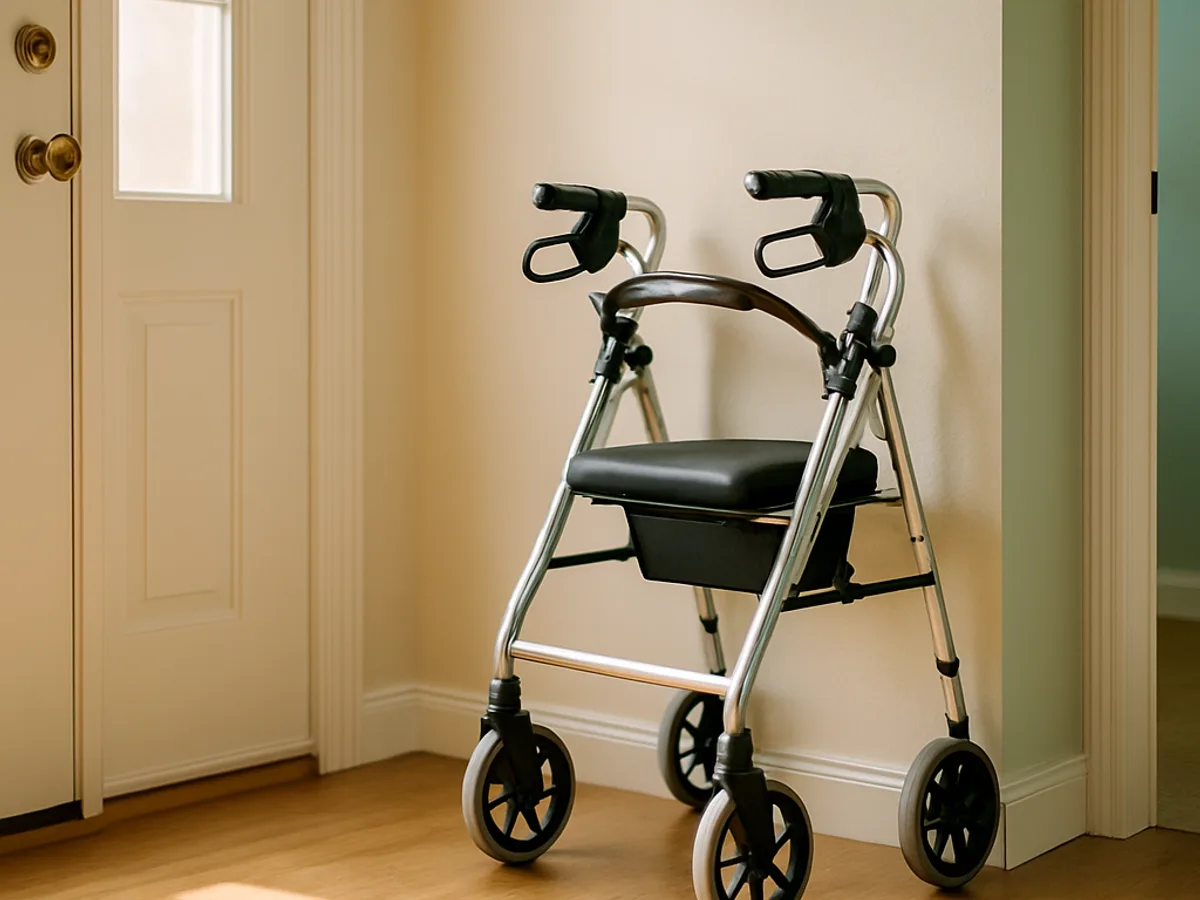
If you need to put real weight through your arms to stay upright over short, mostly-indoor distances, a two-button folding walker like the Drive Medical 10210-1 is more stable than the free-rolling Nitro rollator. Its front wheels ease it forward while the rear glide caps resist rolling, so it stays put when you lean on it. The cost of that stability is speed and a seat: you advance it step-by-step and there is nowhere to rest. It is not automatically 'better' than a rollator or a cane — the right device depends on how much support you need, and a physical therapist should confirm the choice and set the height.
Rate this pick
Our own community ratings — from confirmed Amazonia readers, never Amazon. Yours helps the next person decide, and steers what we feature next.
What does the research say about the Drive Medical Two-Button Folding Walker With 5-Inch Wheels?
Every claim below is tied to a source you can open, quoted verbatim — how we research picks.
-
“You can support up to half (or more) of your weight with a walker. ... Standard walkers (with four legs and without wheels) are typically used indoors. They need to be picked up to move forward and are the most stable walker.”
A walker lets you bear far more weight than a cane, and no-wheel walkers are the most stable option.
HealthInAging.org (AGS Health in Aging Foundation), 'Tip Sheet: Choosing the Right Cane or Walker' · 2024 ↗ -
“If your walker does not have wheels, then you will need to lift it and place it in front of you to move forward. ... Make sure your walker has been adjusted to your height. The handles should be at the level of your hips.”
A walker without free-rolling wheels must be advanced/lifted each step and fitted to your height — the trade-off for its stability.
MedlinePlus (U.S. National Library of Medicine), 'Using a walker' · 2023 ↗ -
“increased fall risk results when devices are not professionally prescribed or properly fit.”
A device that is not properly prescribed or fitted can raise, not lower, fall risk.
PMC (Kum et al., 'Assistive device use and mobility-related factors among adults aged ≥ 65 years') · 2019 ↗
Educational summary of the research — not medical or veterinary advice. Evidence strength varies and individual results differ; talk to a qualified professional before changing your (or your pet's) health routine.
How does the Drive Medical Two-Button Folding Walker With 5-Inch Wheels compare?
| Drive two-button folding walker | Nitro 4-wheel rollator | Cane | |
|---|---|---|---|
| Weight you can bear on it | High — lean up to ~half your weight | Low — rolls freely, not meant to lean on | Low — supports ~25% of weight |
| Free-rolling / has a seat | No — front wheels + rear glides resist rolling, no seat | Yes — 4 wheels roll freely, built-in seat | No — single contact point, no seat |
| Best use | Short, mostly-indoor distances, maximum steadiness | Longer / outdoor distances, rest breaks | Mild balance help, more independent walkers |
| How you move it | Advance it and bear down each step | Push and keep walking | Move with each step |
| Weight capacity | 350 lb | ~300 lb (Drive Nitro) | Varies by model |
Buy it if
- Someone who needs to put real weight through their arms to stay upright and needs maximum steadiness
- Users moving short distances, mostly indoors, where speed matters less than stability
- People with significant balance, gait, or lower-body weakness that a cane can't safely support
- Anyone told by a PT or doctor they need a weight-bearing walker rather than a free-rolling rollator
Skip it if
- Anyone who wants to walk longer distances or outdoors and needs a seat to rest — choose a rollator
- Active users who only need light balance support and can manage with a cane
- People who haven't yet had a professional assess which device fits their needs and height
Is the Drive Medical Two-Button Folding Walker With 5-Inch Wheels worth it?
The genuinely more-stable counterpart to the Nitro rollator: a light aluminum two-button walker that stays planted when you lean on it, so you can bear real weight over short indoor distances. You trade speed and a seat for that steadiness, and it is not a substitute for a rollator or a cane — have a physical therapist confirm the device and set the height first.
Check price on Amazon Live price & reviews on AmazonQuestions, answered
- Standard walker vs. rollator vs. cane — which is right for me?
- It depends on how much weight you need to put through your arms. A cane supports roughly a quarter of your weight and suits milder balance issues. A walker lets you bear up to half or more of your weight and is the steadier choice for significant weakness or balance problems; four-leg/no-wheel walkers are the most stable. A 4-wheel rollator rolls freely and adds a seat for longer distances, but it is meant to guide you, not to be leaned on. A physical therapist should match the device to your needs. Source HealthInAging.org — Choosing the Right Cane or Walker ↗MedlinePlus — Using a walker ↗
- Isn't a 4-wheel rollator safer because it has more wheels?
- No — more wheels is not more stable. A rollator's four wheels roll freely, so it is designed to be guided rather than leaned on; if you put your weight on it, it can roll away. A walker with front wheels and rear glide caps (or no wheels at all) resists rolling so it stays planted when you bear down. Get any device professionally fitted first: research shows a wrong or poorly-fitted device can actually increase fall risk. Source HealthInAging.org — Choosing the Right Cane or Walker ↗PMC — assistive device use and fall risk ↗
- How do I set it to the right height?
- Stand upright inside the walker with your arms hanging at your sides; the handles should sit at about the height of your wrists (roughly hip level). The Drive 10210-1 adjusts from 32 to 39 inches in 1-inch steps. Too high or too low leads to poor posture and can raise fall risk, so if it doesn't feel right, ask your healthcare provider to check the fit. Source HealthInAging.org — Choosing the Right Cane or Walker ↗MedlinePlus — Using a walker ↗
- Can I use it outside, and does it have a seat?
- It has no seat, and it is built for short, mostly-indoor distances. The 5-inch front wheels help it glide forward while the rear glides keep it steady, but you still advance it deliberately each step rather than roll continuously. For longer walks, outdoor terrain, or if you need somewhere to rest, a 4-wheel rollator with a seat is the better tool — the two devices solve different problems. Source MedlinePlus — Using a walker ↗HealthInAging.org — Choosing the Right Cane or Walker ↗