Austin Air HealthMate Standard Air Purifier (HM400/B400), White — 4-Stage Filtration with Activated Carbon & Zeolite
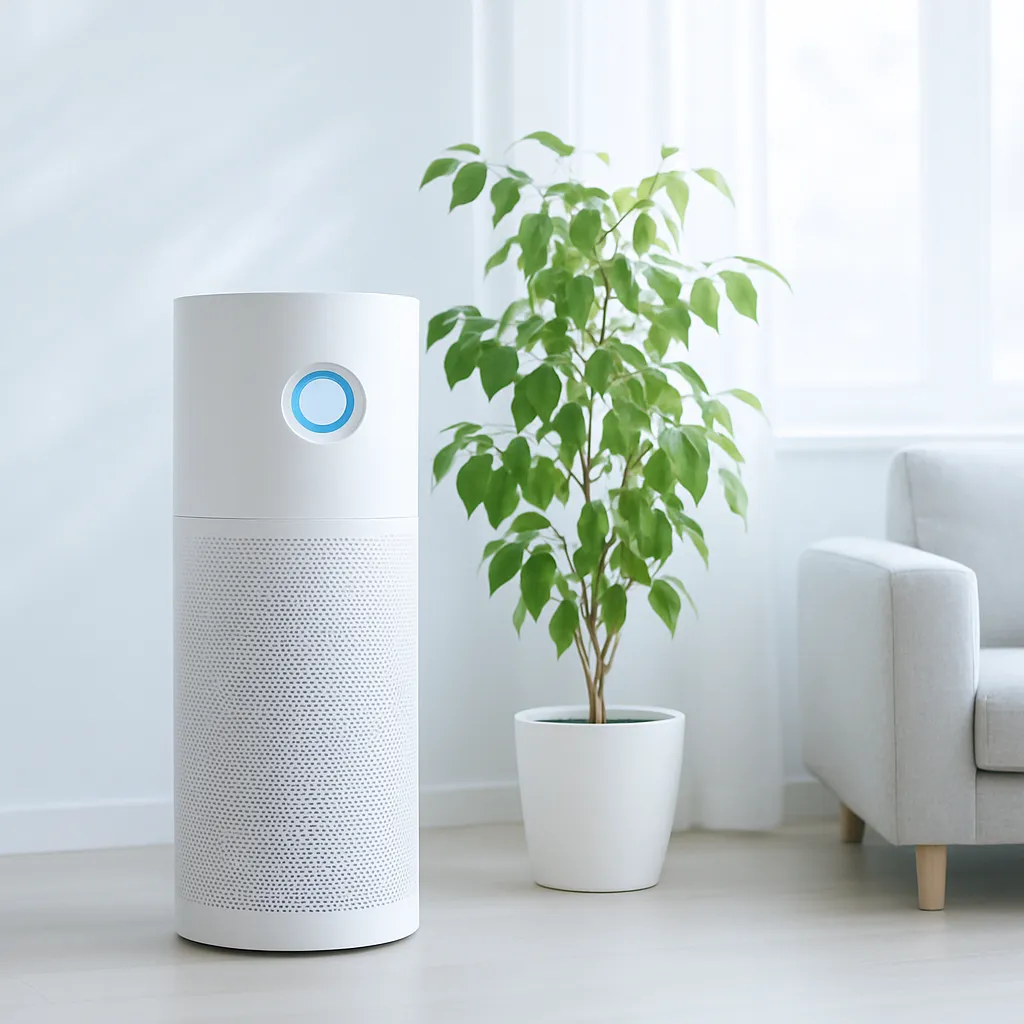
The Austin Air HealthMate is the gas-and-VOC counterpart to the particle-focused Coway. Its up to 15 lbs of activated carbon and zeolite is built to adsorb chemical off-gassing and odors (formaldehyde, VOCs, smoke) that a HEPA-only unit cannot remove, while its 60 sq ft of medical-grade HEPA still handles particulates. Choose it when your concern is chemicals and smells, not just dust and pollen. It is heavy, basic, and pricey, and like every air cleaner it supplements, never replaces, source control and ventilation.
Rate this pick
Our own community ratings — from confirmed Amazonia readers, never Amazon. Yours helps the next person decide, and steers what we feature next.
What does the research say about the Austin Air HealthMate Standard Air Purifier?
Every claim below is tied to a source you can open, quoted verbatim — how we research picks.
-
“Note that most filters are designed to filter either particles or gases.”
Particle filters and gas filters are different tools; HEPA-type media is not designed to capture gases.
US EPA, Guide to Air Cleaners in the Home · 2023 ↗ -
“To filter gases, choose a portable air cleaner with an activated carbon filter or other filter designed to remove gases.”
Removing gaseous pollutants like VOCs requires an activated carbon filter, which is what the HealthMate provides in bulk.
US EPA, Guide to Air Cleaners in the Home · 2023 ↗ -
“The most effective ways to improve your indoor air are to reduce or remove the sources of pollutants and to ventilate with clean outdoor air.”
No purifier is a substitute for source control and ventilation; a filter supplements, not replaces, those steps.
US EPA, Air Cleaners and Air Filters in the Home · 2023 ↗
Educational summary of the research — not medical or veterinary advice. Evidence strength varies and individual results differ; talk to a qualified professional before changing your (or your pet's) health routine.
How does the Austin Air HealthMate Standard Air Purifier compare?
| Austin Air HealthMate HM400 | Coway AP-1512HH | Levoit Core 400S | |
|---|---|---|---|
| Primary job | Gases, VOCs, formaldehyde, smoke odor + particles | Particulates (True HEPA) | Particulates + light odor |
| Activated carbon amount | Up to 15 lbs carbon + zeolite | Thin deodorization/carbon filter (~ounces) | Granular carbon layer in 3-in-1 filter |
| Rated room size | Up to 1500 sq ft | ~361 sq ft | Up to ~1733 sq ft (HEPA mode) |
| Filter life | ~5 years | HEPA ~12 mo, carbon ~6 mo | ~6-12 months |
| Weight / controls | 47 lbs, manual dial | ~12.3 lbs, auto + sensor | ~15.7 lbs, smart/WiFi + sensor |
Buy it if
- You are in a newly built, renovated, or newly furnished space and worried about formaldehyde and VOC off-gassing
- You need to knock down smoke odor (wildfire, cooking, tobacco) that a HEPA-only purifier leaves behind
- You want one heavy-duty unit that does both gases and particles for a large room, and value low-maintenance 5-year filters
- You are chemically sensitive and prioritize a large carbon bed over app connectivity and auto modes
Skip it if
- Your concern is only dust, pollen, or pet dander, where the cheaper, lighter Coway True HEPA is enough
- You want smart features, an air-quality sensor, or auto mode — this is a manual 3-speed dial with none of that
- You can solve the problem at the source (remove the off-gassing item, ventilate), which EPA says is more effective than any filter
Is the Austin Air HealthMate Standard Air Purifier worth it?
The low-tox pick when the enemy is chemicals and smells, not just dust. Its up to 15 lbs of activated carbon and zeolite genuinely target the VOCs, formaldehyde, and odors that HEPA cannot touch, while still carrying 60 sq ft of medical-grade HEPA for particles. It is heavy, basic, and expensive, and it is a supplement to source control and ventilation, never a replacement. But if gas-phase pollution is your real worry, this is the mainstream unit that actually addresses it.
Check price on Amazon Live price & reviews on AmazonQuestions, answered
- The Coway (HEPA) or the Austin Air (carbon), which should I buy?
- It depends on the problem, not the price. If your concern is dust, pollen, pet dander and other particles, the Coway AP-1512HH is a proven, cheaper, lighter True HEPA unit that is plenty. Choose the Austin Air HealthMate when your worry is chemical — off-gassing from new furniture, paint, cabinetry, flooring or plastics, plus smoke odor — because HEPA lets those gases pass through and only a large activated carbon bed adsorbs them. The HealthMate also carries HEPA, so it does both, at the cost of weight, price and no smart features. EPA notes most filters are designed to filter either particles or gases, which is exactly why the two units read as different tools. Source EPA: Guide to Air Cleaners in the Home ↗
- Does it actually remove formaldehyde and VOCs?
- It is built for exactly that: up to 15 lbs of activated carbon blended with zeolite, the sorbent material EPA identifies for removing gases and odors. Carbon adsorbs many VOCs and odors well, and zeolite helps with lighter molecules. Be realistic, though: no gas filter captures every compound, adsorption efficiency varies by chemical and humidity, and EPA states that no air cleaner or filter will eliminate all of the air pollutants in your home. Treat it as meaningful reduction, not zero. Source EPA: Guide to Air Cleaners in the Home ↗
- Isn't a $600+ purifier overkill, can't I just open a window?
- Often, yes, and you should. The single most effective step is source control plus ventilation: remove or reduce the pollutant, and air out with clean outdoor air. EPA is explicit that this is the most effective way to improve indoor air, and that filtration does not replace controlling pollutants and ventilating. A carbon unit like this earns its keep when you cannot remove the source (new-build off-gassing, fixed cabinetry, a smoky outdoor-air season that makes opening windows counterproductive). Buy it as a supplement to ventilation, not a license to skip it. Source EPA: Air Cleaners and Air Filters in the Home ↗
- How often, and how much, to replace the filter?
- Austin Air uses one combined filter designed to last about five years under normal residential use, which is far longer than the annual HEPA plus semi-annual carbon swaps on most units. Important caveat: activated carbon adsorbs a finite amount and eventually saturates, so heavy VOC or smoke exposure shortens real-world life, and a saturated carbon bed stops adding benefit and can even release odors. Replacement filters are a significant cost, so budget for them and replace on schedule rather than assuming the full five years in a high-load home. Source Austin Air (manufacturer specs) ↗