GooingTop LED Grow Light, 6000K Full Spectrum Clip-On Plant Growing Lamp with White + Red LEDs, 5-Level Dimmable, 4/8/12H Timer
Yes — the GooingTop clip-on grow light is the best-value way to fix light for a single plant. It clamps almost anywhere, and its flexible gooseneck aims a full-spectrum 6000K + 660nm red beam right at one plant or a dim corner. A built-in 4/8/12-hour timer and 5 brightness levels let you match duration and intensity to the plant. It's for one pot, though — to light a whole shelf you want a strip, not a clip.
Rate this pick
Our own community ratings — from confirmed Amazonia readers, never Amazon. Yours helps the next person decide, and steers what we feature next.
What have experts found about the GooingTop LED Grow Light?
Every claim below is tied to a source you can open, quoted verbatim — how we research picks.
-
“The part of the light spectrum that plants use is called Photosynthetically Active Radiation, which is composed of primarily red and blue light.”
Plants photosynthesize with specific wavelengths — primarily red and blue — which is what a full-spectrum grow light targets.
University of Minnesota Extension · n.d. ↗ -
“Light intensity depends upon the distance of the light source from the plant and decreases rapidly with increasing distance.”
Distance controls how much light a plant actually gets — so a clip light must be aimed close enough to matter.
University of Maryland Extension · n.d. ↗ -
“Most plants require a period of darkness to develop properly, so illuminate them for no more than 16 hours each day in total, especially if using artificial light combined with natural light.”
Match the light to the plant, and don't run it around the clock — plants need a dark period.
University of Maryland Extension · n.d. ↗
How does the GooingTop LED Grow Light compare?
| GooingTop clip-on grow light | Barrina T5 shelf strip | A sunny window | |
|---|---|---|---|
| What it lights | One plant or a small corner | A whole shelf or rack of pots | Only what sits in the beam, when sunny |
| Aiming the light | Flexible gooseneck points exactly where you want | Fixed strip mounted over the shelf | Fixed — the plant must go to the window |
| Controlling intensity | Clip distance + 5 dim levels + timer | Mounting height + a plug-in timer | Swings with season, weather, direction |
| Best use | Boosting a single statement plant in a dim spot | Lighting many pots cheaply at once | Free light when it's genuinely bright |
Buy it if
- Anyone with a single statement plant sulking in a dim corner or on a dark desk
- Renters who want to clamp a light to a shelf edge or windowsill with no mounting
- People who want to aim light precisely at one plant and set a hands-off timer
- Small-space growers starting a few seedlings who don't need a whole rack lit
Skip it if
- Anyone lighting a whole shelf or collection — a linkable T5 strip covers far more
- Growers who want a rock-solid arm — a budget gooseneck can sag and need re-aiming
- People with a genuinely bright, sunny window that already keeps the plant happy
Is the GooingTop LED Grow Light worth it?
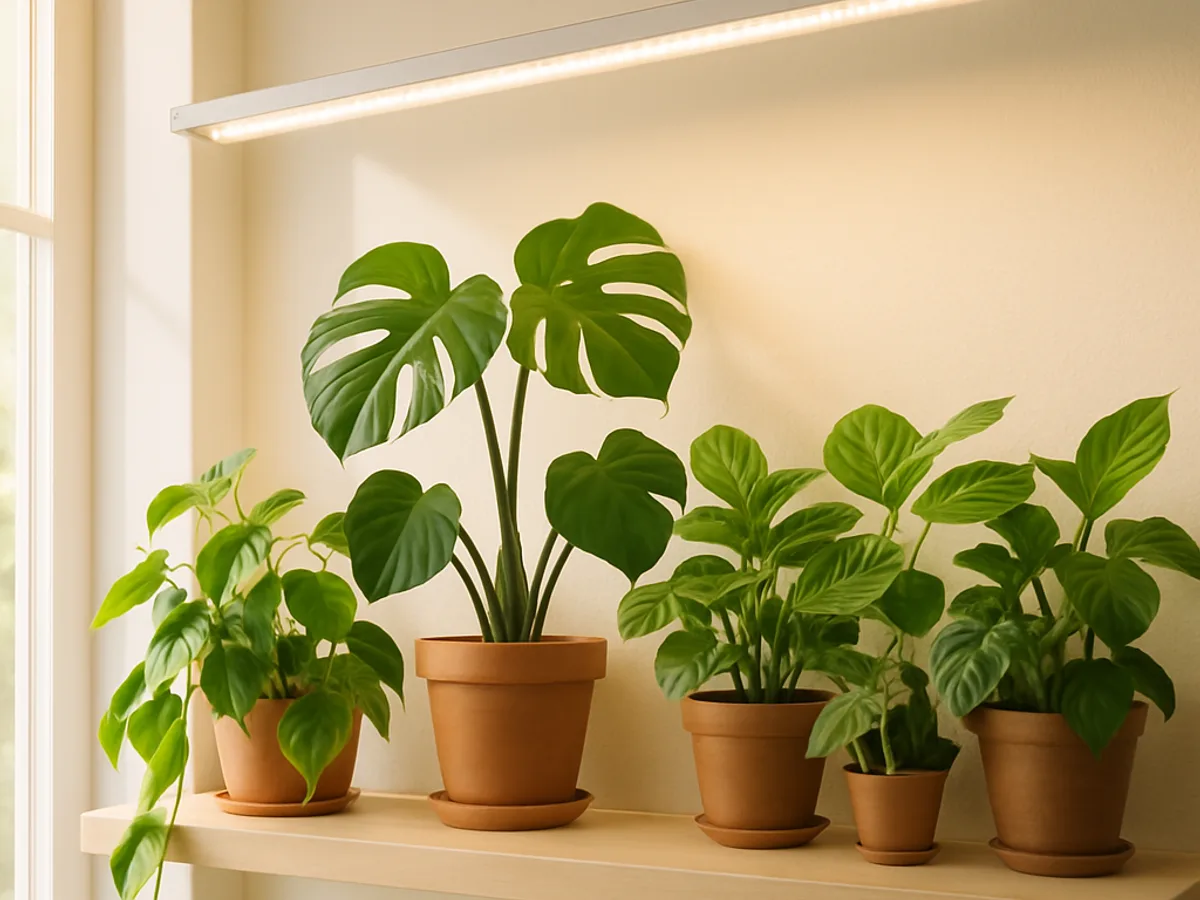
The value benchmark for lighting one plant: a clamp-anywhere gooseneck with full-spectrum white + deep-red LEDs, five dimming levels and a 4/8/12-hour timer. Keep the head close, tune the hours to the species, and re-aim the arm if it droops. For a whole shelf, reach for the Barrina strip instead — but for a single plant in a dark spot, this is the tidy, affordable fix.
Check price on Amazon Live price & reviews on AmazonQuestions, answered
- Clip-on light vs a shelf strip — which should I get?
- It comes down to how many plants. A clip-on gooseneck like the GooingTop lights one plant or a dim corner and lets you aim the beam precisely — ideal for a single statement plant or a spot the sun never reaches. A strip like the Barrina T5 mounts over a whole shelf and lights many pots at once for the price of one clip lamp. One plant: clip. A collection or a rack: strip. Source UMN Extension — Lighting for indoor plants ↗UMD Extension — Lighting for indoor plants ↗
- What are the real downsides of a cheap clip grow light?
- Two honest ones. First, it only covers one plant or a small area — point it at a shelf and the pots at the edges get almost nothing. Second, an inexpensive gooseneck arm can sag or drift over time, so the beam wanders off-target; re-aim it every so often. And because intensity drops off fast with distance, a clip light only helps if you keep it close enough to the plant to count. Source UMD Extension — Lighting for indoor plants ↗
- How close should the clip light sit, and how long should it run?
- Distance sets intensity — it drops off rapidly as the light moves away — so keep the head fairly close to the canopy and watch the plant: pale, stretched growth means too far or too dim; scorched, bleached leaves mean too close. Run it a set number of hours (the timer offers 4/8/12), but never more than 16 hours a day, since plants need a dark period. Tune both to the species. Source UMD Extension — Lighting for indoor plants ↗UMN Extension — Lighting for indoor plants ↗
- Is a clip grow light the same as a normal desk lamp?
- No. Plants photosynthesize mostly with red and blue wavelengths — the band called Photosynthetically Active Radiation — and this lamp's 6000K white plus deep-red 660nm LEDs are built to deliver that usable light. A regular household bulb is tuned for how a room looks to your eyes and produces very little a plant can grow on. Still, match the plant to your light: pick species whose needs suit the spot. Source UMN Extension — Lighting for indoor plants ↗