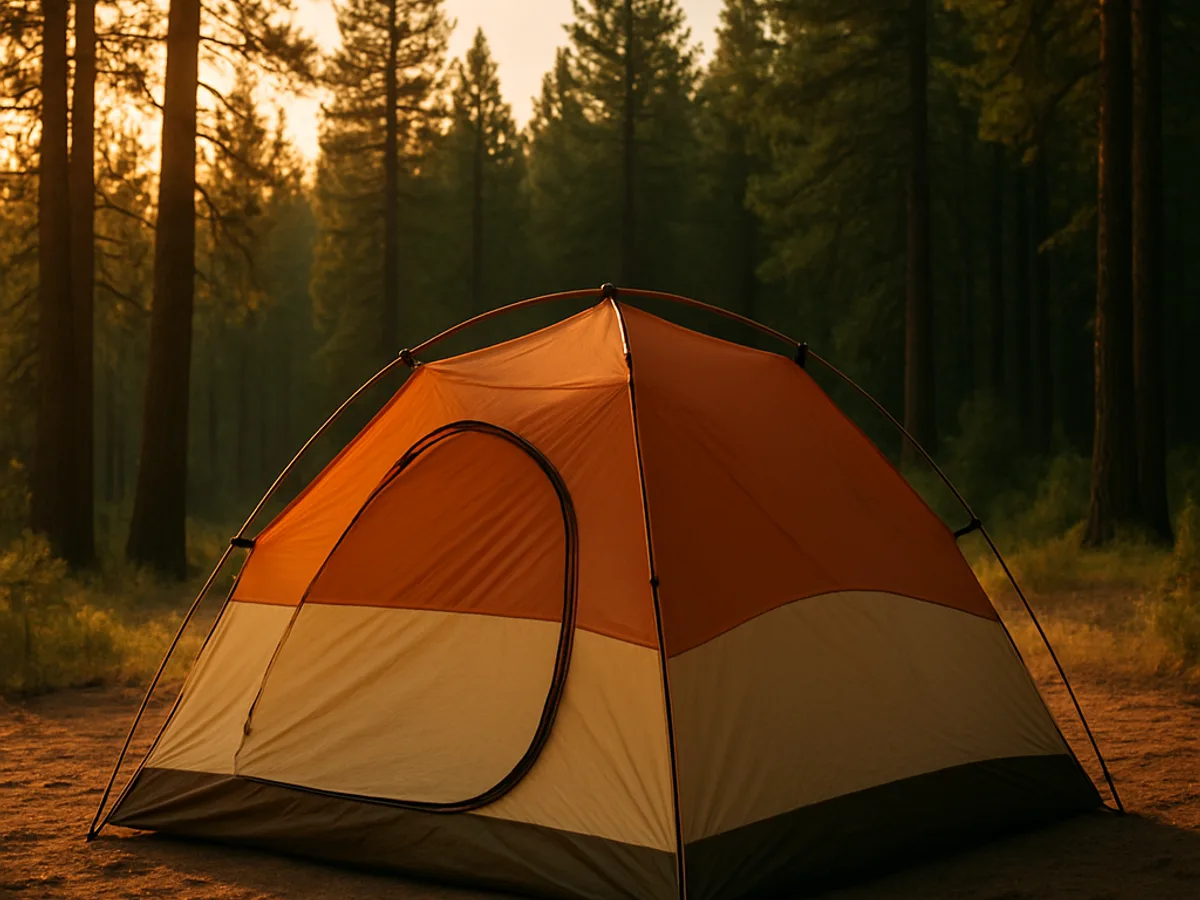
Coleman Sundome Camping Tent with Rainfly, 2/3/4/6 Person, Sets Up in 10 Mins
The Coleman Sundome is the value default for a Shelter starter pick: a freestanding 3-season dome that pitches in about 10 minutes, includes a rainfly, and costs a fraction of a backpacking tent. It's built for car camping and mild spring/summer/fall weather, not winter, snow loads, or gram-counting on the trail.
Rate this pick
Our own community ratings — from confirmed Amazonia readers, never Amazon. Yours helps the next person decide, and steers what we feature next.
What have experts found about the Coleman Sundome Camping Tent with Rainfly?
Every claim below is tied to a source you can open, quoted verbatim — how we research picks.
-
“the majority of tents on the market are of the 3-season variety, which is because most backpackers stick to established routes mostly in the summer months.”
A 3-season tent covers the trips most campers actually take.
Switchback Travel — How to Choose a Backpacking Tent · 2025 ↗ -
“Finally, winter explorers and those camping on snow have a whole different set of requirements and should look for a true 4-season tent model.”
A 3-season tent is weather protection, not weatherproofing magic — it isn't built for harsh winter or heavy snow.
Switchback Travel — How to Choose a Backpacking Tent · 2025 ↗ -
“Warm air inside moves out to the rainfly, which is cooler because the outside air is cooler. The result is condensation on the underside of your rainfly.”
Morning moisture is usually condensation, not a leak — it forms when warm, humid air hits cool fabric, which is why a rainfly plus ventilation matters.
REI Expert Advice — How to Prevent Condensation in a Tent · n.d. ↗
How does the Coleman Sundome Camping Tent with Rainfly compare?
| Coleman Sundome | Ultralight backpacking tent | No tent (tarp/cowboy camp) | |
|---|---|---|---|
| Weather + bug protection | Full walls, mesh + rainfly, zip door | Full, but thinner fabrics | Minimal to none |
| Typical price | Budget (~$45-70) | Premium (~$300-600) | Near-free |
| Weight / packability | Heavy (~7.5 lb), car only | Very light (~2-3 lb), trail-ready | Lightest of all |
| Setup | Easy, ~10 min, freestanding | Fiddlier, sometimes trekking-pole pitch | Fast but exposed |
| Cold/snow capability | 3-season only | Model-dependent, some 3-4 season | None |
Buy it if
- Weekend car campers and festival-goers who want a cheap, roomy, fast-pitch shelter
- First-time campers who want a 10-minute freestanding setup without a big spend
- Mild-weather spring-to-fall trips, backyard camping, and kid sleepovers
- Anyone wanting a low-risk, budget starter tent before investing in premium gear
Skip it if
- Ultralight backpackers counting grams — at ~7.5 lb this is a car-camping weight
- Winter and alpine campers facing snow loads or strong winds — it's 3-season only
- Groups needing standing height or multi-room space for extended trips
Is the Coleman Sundome Camping Tent with Rainfly worth it?
The safe, popular value pick for the Shelter facet: an easy-pitch 3-season dome that keeps weekend car campers dry and comfortable for a fraction of a backpacking tent's price. Match it to mild weather and drive-up sites, ventilate against condensation, and it delivers — just don't ask a budget 3-season tent to survive winter.
Check price on Amazon Live price & reviews on AmazonQuestions, answered
- Backpacking tent or car-camping tent — which should I buy?
- If you drive to the campsite, a car-camping dome like the Sundome wins: it's roomier, far cheaper, and pitches in minutes, with the tradeoff of weight (~7.5 lb). Buy an ultralight backpacking tent only if you're carrying it for miles — you pay 5-10x more to shave pounds. Most weekend campers don't need that. Source Switchback Travel — How to Choose a Backpacking Tent ↗
- Will I stay dry in the rain?
- For normal rain, yes: it ships with a rainfly and a WeatherTec floor with welded corners and inverted seams. But treat it as protection, not a force field — pitch the fly taut, keep the floor off sharp objects, and don't expect it to shrug off a multi-day storm or high winds. Source Switchback Travel — How to Choose a Backpacking Tent ↗
- There's water inside the tent in the morning — is it leaking?
- Almost always it's condensation, not a leak. Warm, moist air from your breath and body hits the cooler fabric overnight and beads up — this is normal in any tent. The fix is airflow, not sealing it shut: crack the vents, windows, or door so humid air can escape. Source REI Expert Advice — How to Prevent Condensation in a Tent ↗
- Can I use it for winter or snow camping?
- No. This is a 3-season tent — good for spring, summer, and fall, and only light dustings of snow. It's not engineered for heavy snow loads, sustained high winds, or hard winter conditions; that's what a heavier 4-season tent is for. Source Switchback Travel — How to Choose a Backpacking Tent ↗