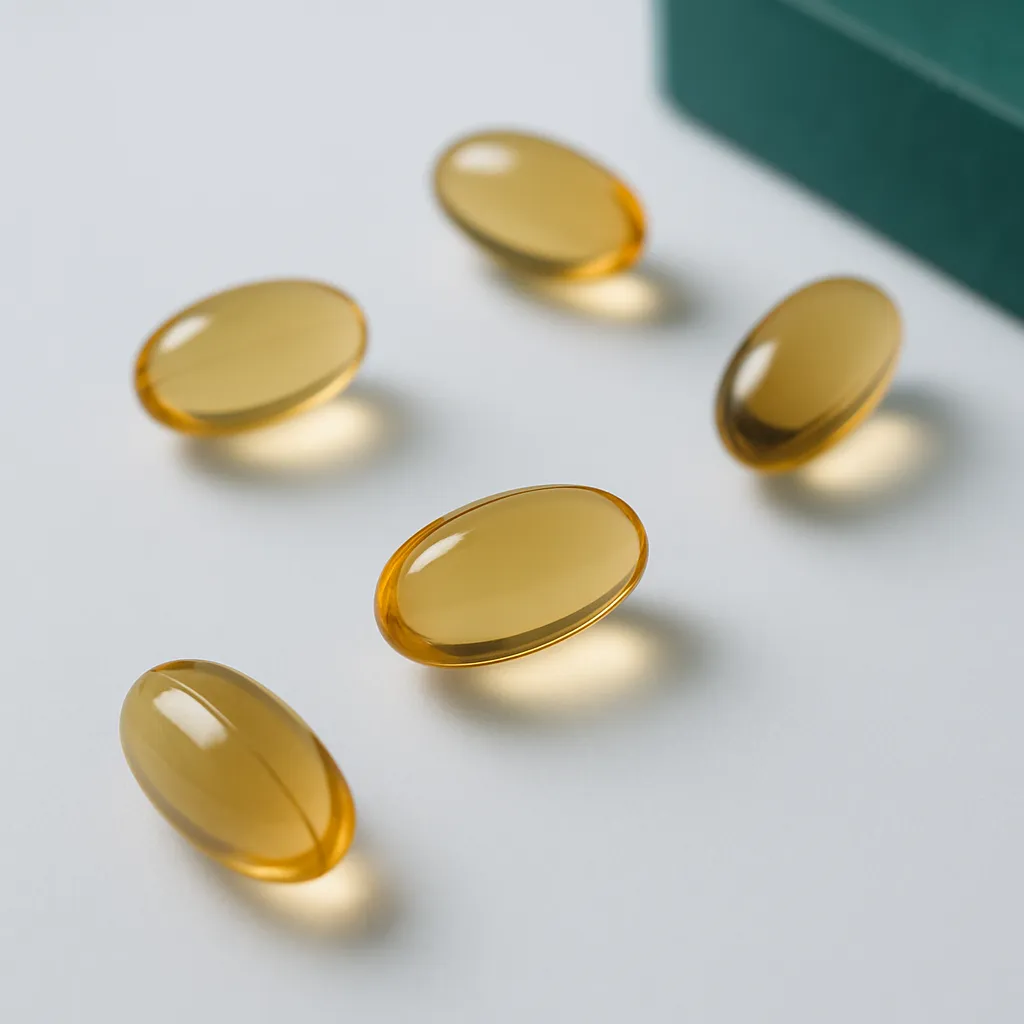
Qunol Ultra CoQ10 100mg, 3x Better Absorption, Patented Water and Fat Soluble Natural Supplement Form of Coenzyme Q10, Antioxidant for Heart Health, 120 Count Softgels
Coenzyme Q10 (ubiquinone) is the strongest non-fish-oil pick for the heart-and-brain facet because it targets a different mechanism than omega-3: it's the coenzyme heart and muscle cells rely on to produce ATP. Qunol Ultra delivers 100 mg of solubilized ubiquinone per softgel — the same form and dose unit studied in the Q-SYMBIO chronic-heart-failure trial, where 100 mg three times daily cut major adverse cardiovascular events by half (HR 0.50). It's especially relevant for statin users, since statins lower the body's own CoQ10 and randomized trials show supplementation eases statin-associated muscle symptoms — though honestly, it does not change objective creatine-kinase levels, and Q-SYMBIO is a single trial in a sick population, so treat this as evidence-supported support, not a guaranteed drug-level outcome.
Rate this pick
Our own community ratings — from confirmed Amazonia readers, never Amazon. Yours helps the next person decide, and steers what we feature next.
What does the research say about the Qunol Ultra CoQ10 100mg?
Every claim below is tied to a source you can open, quoted verbatim — how we research picks.
-
“The primary long-term endpoint was reached by 15% of the patients in the CoQ10 group versus 26% in the placebo group (hazard ratio: 0.50; 95% confidence interval: 0.32 to 0.80; p = 0.003).”
In chronic heart failure, adding CoQ10 100 mg three times daily halved major adverse cardiovascular events versus placebo over two years.
JACC: Heart Failure — Q-SYMBIO: A Randomized Double-Blind Trial (Mortensen et al.) · 2014 ↗ -
“no reduction in the plasma creatine kinase level was observed after CoQ10 supplementation (WMD, 0.09; 95% CI, −0.06 to 0.24; P=0.23).”
In statin-treated patients, CoQ10 supplementation reduced muscle symptoms but did NOT lower objective creatine-kinase levels — an important honesty caveat.
Journal of the American Heart Association — Effects of Coenzyme Q10 on Statin-Induced Myopathy (Qu et al.) · 2018 ↗ -
“During a median follow-up of 5.3 years, a major cardiovascular event occurred in 386 participants in the n-3 group and in 419 in the placebo group (hazard ratio, 0.92; 95% confidence interval [CI], 0.80 to 1.06; P=0.24).”
For comparison, marine omega-3 (the fish-oil route) did NOT significantly reduce major cardiovascular events in the large primary-prevention VITAL trial — the omega-3 outcome evidence is genuinely mixed.
New England Journal of Medicine — VITAL (Manson et al.) · 2019 ↗
Educational summary of the research — not medical or veterinary advice. Evidence strength varies and individual results differ; talk to a qualified professional before changing your (or your pet's) health routine.
How does the Qunol Ultra CoQ10 100mg compare?
| Qunol Ultra CoQ10 | Nordic Naturals fish oil | Algae omega-3 (vegan) | |
|---|---|---|---|
| Primary mechanism | Mitochondrial ATP/energy + antioxidant in heart-muscle cells | EPA/DHA — triglyceride & anti-inflammatory pathway | Same EPA/DHA as fish oil, from marine algae |
| Strongest RCT signal | Q-SYMBIO: MACE HR 0.50 in heart failure (one 420-pt trial) | Mixed: VITAL null for primary prevention; benefit mainly with Rx-grade EPA | Bioequivalent for raising omega-3 index; shares fish oil's mixed outcome data |
| Best-fit user | Statin users, older adults, cellular-energy focus | Low omega-3 intake / elevated triglycerides | Vegans/vegetarians wanting EPA+DHA without fish |
| Source / vegan | Made by fermentation; softgel gelatin — not vegan | From fish; fish-derived — not vegan | From algae; vegan |
Buy it if
- People on statins who get muscle aches and want an evidence-tested add-on to discuss with their doctor
- Older adults or those focused on cardiovascular and cellular-energy support
- Anyone who wants a heart supplement that ISN'T another fish oil — a genuinely different mechanism
- Those already taking an omega-3 who want to broaden rather than duplicate their coverage
Skip it if
- Anyone expecting a drug-level, guaranteed outcome — this is a supplement backed by one strong trial plus mixed broader data
- People whose main goal is raising their omega-3 index or lowering triglycerides (choose an omega-3 instead)
- Anyone on warfarin/blood thinners, or pregnant or nursing, without first clearing it with a doctor
Is the Qunol Ultra CoQ10 100mg worth it?
The cleanest non-fish-oil pick for the heart-and-brain facet. Qunol's solubilized ubiquinone matches the exact CoQ10 form used in the 420-patient Q-SYMBIO heart-failure trial (major-event HR 0.50) and in the statin muscle-symptom RCTs, so the evidence maps directly onto what's in the softgel. It complements rather than duplicates the omega-3 pick. Stay honest: it's a supplement, the strongest data is a single trial in heart-failure patients, and CoQ10 improves statin muscle symptoms without changing creatine kinase. Best for statin users and cellular-energy seekers.
Check price on Amazon Live price & reviews on AmazonQuestions, answered
- Fish oil or CoQ10 — which should I pick?
- They aren't interchangeable, so pick by goal. Fish oil supplies EPA/DHA and is the choice if you want to raise your omega-3 index or address elevated triglycerides. CoQ10 works on a different lever — it's the coenzyme heart-muscle cells use to make energy — and is the better fit if you're on a statin, are older, or want cellular-energy support. If your existing routine already has an omega-3, CoQ10 adds a genuinely different mechanism rather than duplicating it. Source Q-SYMBIO (CoQ10, JACC: Heart Failure) ↗VITAL (omega-3, NEJM) ↗
- Does the heart-outcome evidence actually hold up?
- Be honest with yourself here: the headline CoQ10 result comes from Q-SYMBIO, a single 420-patient trial in people with moderate-to-severe heart failure, showing a 50% cut in major events and lower mortality. That's impressive but it's one trial in a sick population, not proof it prevents disease in healthy people. On the omega-3 side, the large VITAL primary-prevention trial was null. Neither of these is a drug — treat CoQ10 as evidence-supported support, especially for the groups studied, not a guarantee. Source Q-SYMBIO trial ↗VITAL null primary-prevention result ↗
- I take a statin — will CoQ10 help my muscle aches?
- A meta-analysis of 12 randomized trials (575 patients) found CoQ10 reduced statin-associated muscle pain, weakness, cramps and tiredness. The important caveat: it did NOT lower creatine kinase, the objective blood marker of muscle damage — so the benefit shows up in symptoms, not lab values. It's a reasonable, low-risk thing to try, but discuss it with the doctor who prescribed your statin rather than stopping the statin. Source CoQ10 & statin myopathy meta-analysis (JAHA) ↗
- Ubiquinone or ubiquinol — does the form matter?
- This product is ubiquinone (the oxidized form), which is exactly what was used in Q-SYMBIO and in the statin muscle-symptom trials — so the outcome evidence maps directly onto it. Ubiquinol (the reduced form) is marketed as better absorbed, and Qunol makes that too, but there's little head-to-head trial evidence that ubiquinol produces better clinical outcomes. For an evidence-first buyer, matching the studied form (ubiquinone) is the defensible choice. Source Q-SYMBIO used ubiquinone 100 mg 3x/day ↗